Tibialis posterior tendon dysfunction (TPTD) is a condition that affects one of the key tendons on the inside of your ankle and foot.
This tendon plays an important role in supporting the arch of your foot and allowing smooth, stable walking.
When the tendon becomes inflamed, overstretched, or torn, it can lead to pain, progressive flattening of the foot, and changes in the way you walk.
It is sometimes referred to as adult-acquired flatfoot deformity because, over time, the condition can lead to collapse of the arch in adults.
Early diagnosis and treatment are important to help manage symptoms and prevent long-term structural changes in the foot.
Anatomy

The tibialis posterior is a deep muscle in your lower leg. Its tendon runs behind the inner ankle bone (medial malleolus) and attaches to several bones in the middle of the foot. Its main roles are to:
- Support the arch of the foot
- Help turn the foot inwards (inversion)
- Assist with push-off when walking or running
When healthy, this tendon stabilises your foot and ankle during movement. If it becomes damaged or weakened, the foot can lose its natural support, leading to misalignment and discomfort.
The Tibialis Posterior tendon is also closely associated with the tendon that flex (curl) the toes.
Mechanism of Injury
TPTD often develops gradually due to overuse or repetitive strain, especially in people who are active, have flat feet, or are overweight. It is commonly seen in runners, walkers, and people who spend a lot of time on their feet.
The condition can also be associated with:
- Poor foot biomechanics (e.g. excessive pronation)
- Inflammatory arthritis
- Previous injury to the ankle or foot
- Age-related degeneration of the tendon
In some cases, a sudden injury, such as a fall or misstep, can cause partial or complete rupture of the tendon.
Symptoms
Symptoms of tibialis posterior tendon dysfunction typically develop over time and may include:
- Pain and swelling along the inside of the ankle or foot
- Flattening of the arch of the foot
- Difficulty standing on tiptoes
- Rolling in of the ankle or foot (overpronation)
- Pain when walking, especially on uneven ground or up stairs
- A feeling of instability or weakness in the ankle
As the condition progresses, changes to the shape of the foot and ankle may become more visible.
Diagnosis and Assessment
At LBSM, your assessment will begin with a detailed history of your symptoms and a physical examination. We will look at the alignment of your foot and ankle, test the strength of the tibialis posterior tendon, and assess your walking or running pattern (gait).
To confirm the diagnosis or assess the severity, you may be referred for imaging such as:
- Diagnostic ultrasound – to assess the tendon and detect areas of inflammation or tearing within the muscle or tendon.
- MRI – to assess the condition of the tendon and surrounding structures in more detail.
- X-ray – this is used to look at foot alignment and to rule out fractures, arthritis or other bone conditions
Our sports medicine doctors are highly experienced in musculoskeletal ultrasound and will often carry this out during your appointment for a rapid and accurate diagnosis.
Treatment Options
At LBSM, we take a holistic and conservative-first approach to managing tibialis posterior tendon dysfunction. Most cases can be successfully treated without surgery, particularly when the condition is caught early.
Physiotherapy
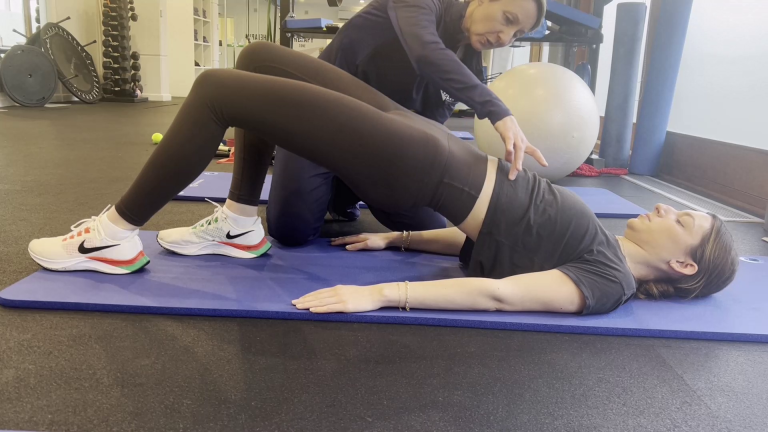
A tailored physiotherapy programme plays a central role in recovery. Treatment may include:
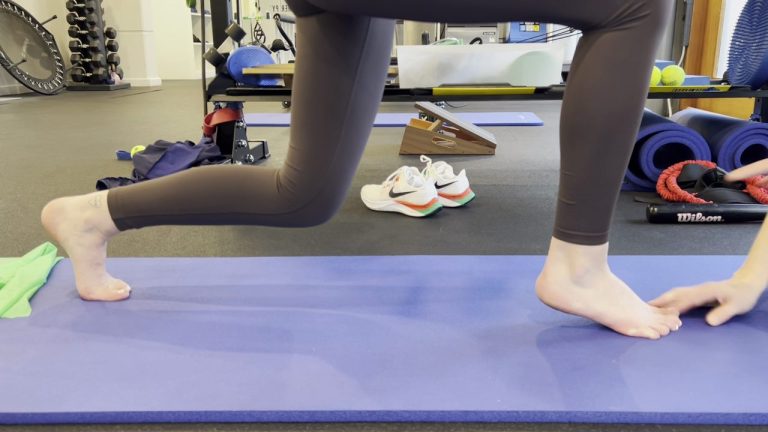
- Strengthening exercises for the tibialis posterior and supporting muscles
- Strengthen the foot muscles including toe flexors
- Improving balance and flexibility of the foot and ankle
- Manual therapy to reduce stiffness and pain
- Gait retraining to improve walking mechanics
- Taping or bracing to support the foot during activity
Your physiotherapists will also guide you through a gradual return to sport or activity, based on your goals and lifestyle.
At LBSM we work very closely with trusted physios to ensure you make the best recovery.
Sports Podiatry
Footwear and foot mechanics are key contributing factors in this condition. Our sports podiatrist will assess your foot posture and walking pattern and provide expert advice on:
- Appropriate footwear for support and stability
- Custom or semi-custom orthotics (insoles) to offload stress on the tendon
- Modifications to improve comfort and reduce strain during daily activity
Nutrition and Recovery Support
Nutrition plays an important role in tendon healing, inflammation control, and recovery. Our sports nutritionist can provide tailored advice on how your diet can support the healing process, reduce body weight if appropriate, and optimise overall joint and tendon health.
Sports Medicine Involvement
Our sports medicine team will coordinate your care and monitor your progress. If symptoms are not settling with physiotherapy and podiatry alone, we may consider additional options such as:
- Ultrasound-guided corticosteroid injections – These may be used selectively in cases of persistent inflammation. They are performed with precision under ultrasound to reduce irritation around the tendon.
- Platelet-rich plasma (PRP) injections – In some cases, PRP therapy may be considered to support tendon healing, although evidence is still evolving.
We will always discuss the pros and cons of any injection treatment carefully with you, and these are usually considered only after a period of structured rehabilitation.
Outlook
With the right care and rehabilitation, most people with tibialis posterior tendon dysfunction can return to their normal activities. However, recovery can take several months, especially if the condition is more advanced. The key to successful treatment is early intervention and a multidisciplinary approach that addresses the underlying causes as well as the symptoms.
If you are experiencing pain or weakness around the inside of your ankle or foot, don’t ignore it. Our team at London Bridge Sports Medicine can help diagnose and manage the problem with expert, personalised care.
To book an appointment please follow this link. Or call us if you would like more information on your treatment or LBSM services.