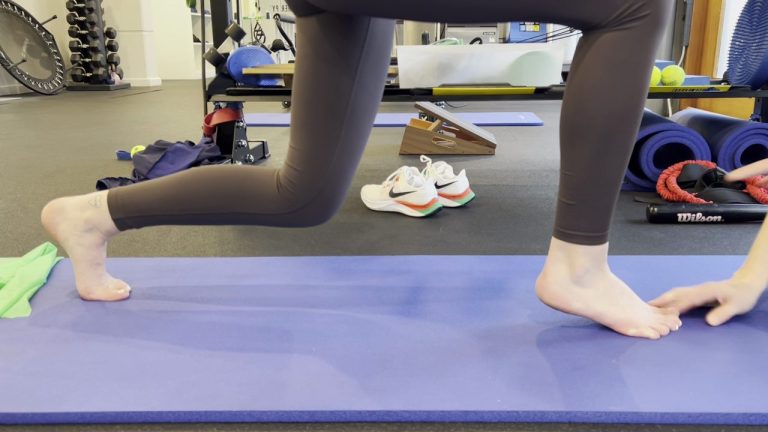
The hip stabiliser muscles play an important role in controlling movement, supporting load through the lower limb, and maintaining pelvic alignment during everyday activities and sport.
Weakness or poor coordination in these muscles is a common driver of hip, knee, and lower back pain, as well as reduced sporting performance.
This exercise library is designed to help restore strength, control, and endurance in the key muscles that support the hip.
Hip Anatomy

The hip is a ball-and-socket joint, formed by the femur (thigh bone) and the pelvis. While it is naturally stable, true control of movement depends on the surrounding muscles.
The hip must balance mobility and stability – too little stability leads to poor control and overload elsewhere in the body.
Key Hip Stabiliser Muscles
This programme targets the main muscles responsible for hip and pelvic control:
Primary hip stabilisers:
- Gluteus medius – pelvic control during single-leg stance
- Gluteus minimus – assists hip alignment and stability
- Gluteus maximus – power, extension, and load control
Supporting muscles:
- Deep hip rotators (control rotation and alignment)
- Tensor fascia lata (TFL)
- Core muscles (pelvic and trunk stability)
- Adductors (balance and directional control)
Why Hip Stability Matters
Good hip control is essential for:
- Walking and running efficiency
- Single-leg balance and landing mechanics
- Knee alignment and injury prevention
- Shock absorption through the lower limb
- Reducing strain on the back, hip, and knee
Poor hip stability often leads to compensation patterns and overload injuries.
Conditions This Programme May Help
This rehabilitation programme is commonly used for:
- Lateral hip pain / gluteal tendinopathy
- Greater trochanteric pain syndrome (GTPS)
- Hip impingement (FAI)
- Patellofemoral knee pain
- IT band-related knee pain
- Lower back pain linked to pelvic control
- Post-injury or post-operative hip weakness
- Running and overload-related injuries
- Groin/adductor strain patterns
It can also be used for injury prevention.
Who This Is For
Suitable for:
- Runners and endurance athletes
- Football, rugby, tennis, and court sport players
- Dancers and performing artists
- Gym users and strength athletes
- Anyone with hip, knee, or lower back overload symptoms
- Individuals returning from injury or surgery
How This Programme Works
Rehabilitation progresses through key stages:
- Activation – re-engaging underactive muscles
- Strength – improving load tolerance
- Control – single-leg stability and alignment
- Function – integrating into movement and sport
The goal is to restore efficient movement patterns and reduce overload on painful structures.