Iliotibial Band Syndrome is a common cause of pain around the outside of the knee or hip and is frequently seen in runners, cyclists, triathletes and individuals taking part in repetitive or endurance-based sport.
It affects both those new to sport and seasoned athletes, and while it can feel frustrating and limiting, it is highly treatable with the right approach.
At London Bridge Sports Medicine (LBSM), we combine sports medicine assessment, physiotherapy, podiatry, running analysis and, when needed, targeted interventions such as shockwave and injection therapy, to help patients return to activity confidently and without ongoing pain.
What Is the Iliotibial Band?
The iliotibial band (ITB) is a long, strong band of connective tissue running down the outside of the thigh. It originates from two muscles at the hip, the tensor fascia lata (TFL) and gluteus maximus, and attaches into the tibia (shin bone) just below the knee.
Its primary role is to provide stability to the hip and knee during walking, running and single-leg load-bearing activities.
What Causes ITB Syndrome?
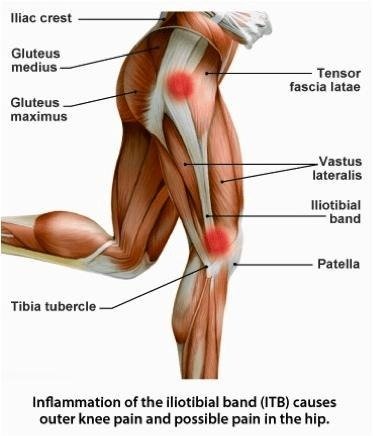
ITB syndrome is not usually caused by a single incident. Instead, it develops gradually due to repetitive loading, irritation or compression of the band against underlying structures.
Common contributing factors include:
- A sudden increase in running mileage, pace or hill training
- Reduced hip strength or control
- Changes to footwear or running style
- Running on a cambered road or always turning in the same direction
- Cycling technique or bike fit issues
- Muscle imbalance and reduced flexibility
Both proximal (hip) and distal (knee) irritation can occur, depending on how load is distributed through the leg.
Symptoms
Distal ITB Syndrome (Knee)
Pain is typically felt on the outer side of the knee and may present as:
- A sharp or burning sensation during running, especially downhill
- Pain that begins only after several minutes of activity
- A clicking, rubbing or snapping feeling
Proximal ITB Syndrome (Hip)
Pain is usually felt at the outer hip and may include:
- Tenderness over the bony prominence at the side of the hip
- Pain when lying on the affected side
- Discomfort during walking, stair climbing or standing on one leg
Symptoms may come and go initially, but without treatment can become persistent.
Diagnosis and Assessment at LBSM
Diagnosis is based on a detailed clinical assessment. At LBSM, your consultation may include:
- Sports medicine examination
- Gait or running assessment with video analysis (link: Running Analysis Service)
- Strength, movement and muscle control testing
- Review of training patterns, footwear and biomechanics
Diagnostic ultrasound may be used during your consultation to assess inflammation or exclude other causes of pain.
MRI is rarely required, except in persistent or more complex cases.

MRI showing proximal ITB
Treatment Options
Most patients respond very well to non-surgical treatment. Your management plan will be tailored to your individual symptoms and goals.
Physiotherapy and Rehabilitation
Physiotherapy is the cornerstone of ITB management.
The focus is not simply stretching the ITB, or using a foam roller!
Research suggests the band itself does not significantly lengthen, but rather improving strength, control and biomechanics throughout the lower limb, is the key to recovery.
A tailored rehabilitation programme may include:
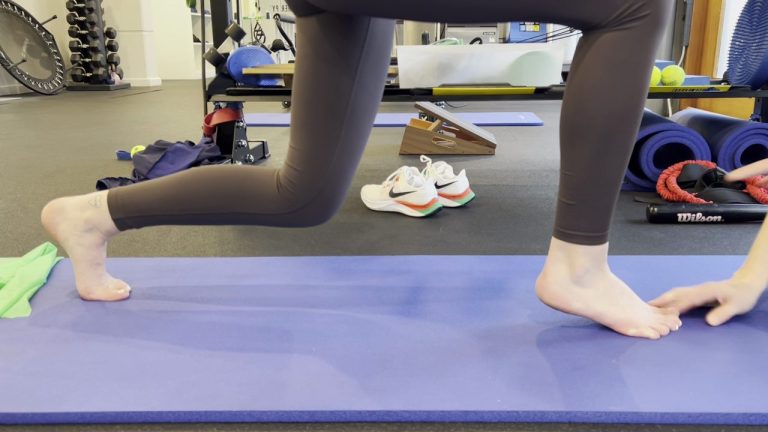
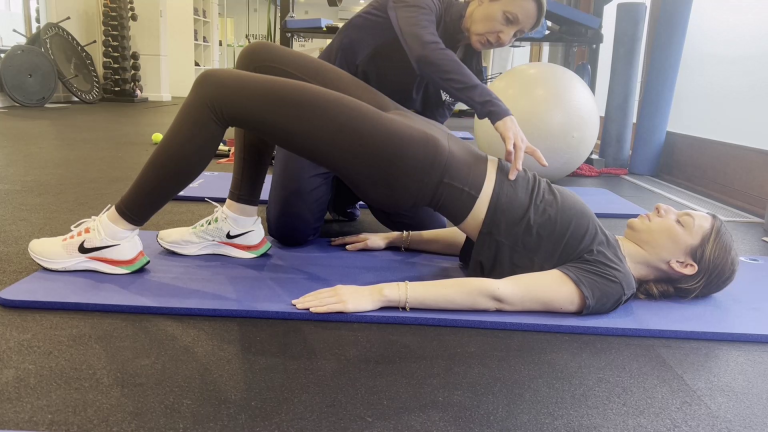
- Strengthening of the lateral glute muscles, particularly gluteus medius and gluteus minimus, which stabilise the pelvis when standing or running on one leg.
- Pelvic control training, helping prevent excessive hip drop, knee valgus (knee collapsing inward) and rotational load that can irritate the ITB.
- Gradual strengthening of quadriceps, hamstrings and calf muscles, to balance load through the chain.
- Mobility work targeting the hip flexors, TFL, and surrounding soft tissue structures.
- Manual therapy and massage, where appropriate, to reduce irritation and support movement pattern optimisation.
- A graded return to running/sport programme, balancing tissue healing with continued conditioning.
Patients often begin to notice an improvement within 4 – 6 weeks when exercises are performed consistently and progression is monitored.
Exercise Programme
These exercises should not significantly aggravate your symptoms, so ensure that you check in with your Physio/Sports Med doctor to make sure these are suitable for you and that you are doing them correctly, with the correct number of repititions.
Biomechanics and Running Assessment
ITB syndrome is frequently linked to movement inefficiencies rather than a structural problem.
A running gait assessment can identify issues such as:
- Excessive hip drop or pelvic tilt
- Over-striding or high impact loading
- Inward knee collapse (dynamic valgus)
- Reduced trunk or hip stability
- Excessive crossover gait
These patterns increase stress through the ITB. Once identified, targeted cueing, strengthening and movement retraining can significantly reduce symptoms and help prevent recurrence.
For cyclists, saddle height, cleat positioning and cadence can also influence load through the lateral knee.
Podiatry and Foot Mechanics
Foot position and lower limb alignment can influence how the ITB behaves during movement. Both over-pronation and high-arched/stiff feet may contribute to symptoms by altering rotational forces at the knee and hip.
At LBSM we have a highly experienced Podiatrist who will carry out a full assessment and can offer a full spectrum of treatment options.
A sports podiatry assessment may include:
- Foot posture and mobility testing
- Footwear review (including running trainers or cycling shoes)
- Temporary orthotics, where helpful
- Running technique modifications
Orthotics are not always required but can be useful short-term tools while strength and motor control improve.
Shockwave Therapy
Shockwave therapy (ESWT) is a non-invasive treatment that uses focused acoustic energy to stimulate tissue healing. It is commonly used for persistent ITB-related pain, particularly when symptoms involve the outer hip or co-exist with gluteal tendinopathy.
How it works:
- Stimulates cellular regeneration and collagen repair
- Reduces sensitivity in irritated tissues
- Improves blood flow and promotes healing in chronic cases
Who it may benefit:
- Patients whose symptoms aren’t resolving with exercise alone
- Individuals with chronic (>3 months) ITB-associated hip pain
- Athletes needing accelerated symptom improvement alongside rehab
What it feels like:
Treatment is short (5–10 minutes) and may feel sharp or uncomfortable at first, although most patients tolerate it well.
Symptoms often improve over 3 – 6 sessions.
Ultrasound – Guided Injections
Injections are not a first-line treatment but can be beneficial in specific scenarios, particularly when pain prevents rehabilitation or when managing symptoms around key sporting events.
All injections at LBSM are performed under ultrasound guidance for precision and safety.
Corticosteroid Injection
A steroid injection may help reduce inflammation and pain, particularly in cases of acute flare-ups around the knee or irritated tissue at the hip.
Pros:
- Rapid pain relief (from days to a week)
- Useful to break the pain cycle and enable rehabilitation
- Can support short-term athletic goals (e.g., training block, race completion)
Cons:
- Effects are temporary
- Not a cure; underlying biomechanics still require correction
- Repeated injections are discouraged due to tissue-health considerations
Used appropriately and sparingly, steroid injections can be a strategic tool, but there must always be a long-term rehabilitation plan alongside them.
Platelet-Rich Plasma (PRP)
PRP is a regenerative treatment that uses a concentrated portion of your own blood to stimulate tissue healing. It may be considered in persistent or chronic cases, especially where tendon involvement is suspected.
How it works:
A small blood sample is processed to separate platelets, which are then injected into the affected tissue under ultrasound guidance.
Who benefits:
- Patients with symptoms lasting >3 months
- Those with associated tendinopathy or recurring flare-ups
- Individuals seeking biologic healing rather than short-term suppression of pain
What it feels like:
Some discomfort or tightness may occur for several days post-treatment before gradual improvement begins.
Prognosis and Return to Sport
With the right treatment plan, most patients experience significant improvement within 6 – 12 weeks, with full return to unrestricted sport often achieved thereafter.
For those training for upcoming races, we can tailor treatment to:
- Maintain conditioning while reducing irritation
- Modify load safely
- Support short-term goals without compromising long-term recovery
The aim is not only symptom relief, but future injury prevention.
References
- Fairclough J et al. The iliotibial band: friction or dysfunction? Journal of Anatomy, 2006.
- Fredericson M, Wolf C. Iliotibial band syndrome in runners: innovative treatment strategies. Sports Medicine, 2005.
- Ellis R et al. ITB syndrome: a systematic review of anatomy and biomechanics. Journal of Orthopaedic & Sports Physical Therapy, 2018.
Frequently Asked Questions
Will ITB syndrome go away on its own?
Mild symptoms may settle with rest, but recurrence is common without rehabilitation, as underlying biomechanical factors remain.
Can I continue running?
This depends on severity. Some patients can continue with modified load; others benefit from temporary reduction while strengthening begins. Your clinician will guide you.
Do I need a scan?
Not always. Imaging is reserved for persistent, atypical or complex cases.
Is stretching enough?
Stretching can help with comfort but is rarely enough on its own. Strengthening and movement retraining are typically the most effective elements.