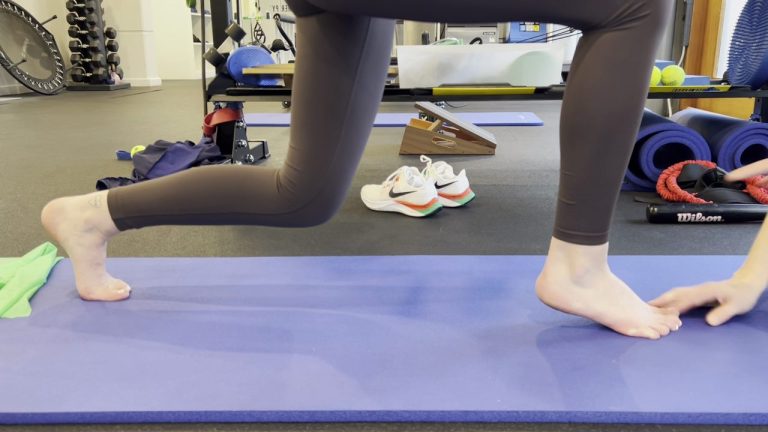
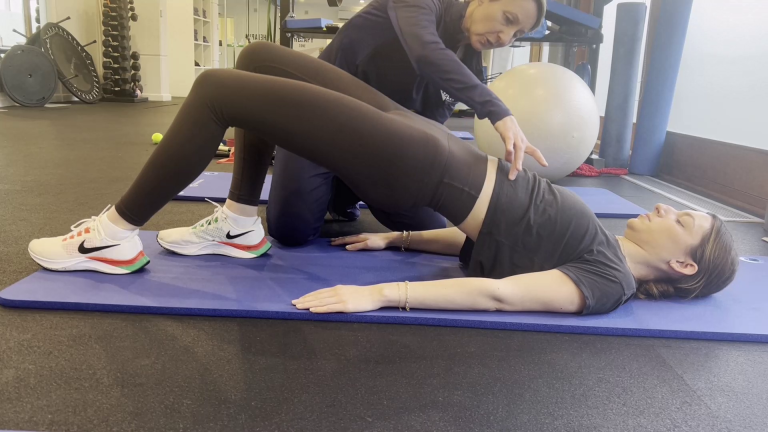
Understanding Your Condition and the Principles of Rehabilitation.
Pain in a tendon – behind the heel, at the front of the knee, around the hip, or in the elbow or shoulder – can be frustrating, especially when it interferes with training, work or daily life.
The good news is that most tendon problems settle with the right type of loading and a structured, progressive plan. This leaflet explains what tendinopathy is, why it develops, and the principles of rehabilitation that will underpin your recovery.
What is a tendon?

Tendons are strong bands of connective tissue that attach muscle to bone. They transmit the force of muscle contraction to produce movement, and they can store and release energy – something especially important in activities that involve running, jumping and changing direction.
What is tendinopathy?
Tendinopathy is the modern, preferred term for persistent tendon pain and loss of function related to loading the tendon. For decades these conditions were called “tendinitis,” based on the belief that they were driven by acute inflammation. Research has shown that inflammation is not the primary driver; rather, tendinopathy reflects changes in the tendon’s structure and the way it tolerates load.
Why does it happen?
Tendinopathies usually develop when the load placed on a tendon exceeds its capacity to adapt and recover – often described as “too much, too soon.” Common contributing factors include:
- A spike in training: more mileage, more intensity, a new sport or a sudden change in activity.
- Returning to exercise after a period of rest or injury.
- Repetitive occupational or sporting demands.
- Age-related changes in tendon tissue, particularly over the age of 40.
- General health factors: poor sleep, high stress, smoking, alcohol, nutrition, and metabolic conditions such as diabetes or raised cholesterol can all influence tendon behaviour.
What does it feel like?
- Pain that builds with loading and settles with rest.
- Morning stiffness that eases after a few minutes of movement.
- A “warm-up phenomenon” – symptoms often improve once you get going, only to return later or the following day.
- Pain reliably reproduced by a specific movement: hopping, squatting, lifting, gripping, or rising on the toes.
Principles of Rehabilitation
There are two simple goals:
- Improve the tendon’s tolerance to load.
- Restore your function – in the limb, and in you as a person.
Rehabilitation is not quick. For most tendinopathies, meaningful recovery takes 3–6 months, and sometimes longer. What matters is a steady, graded increase in load rather than chasing a day-to-day reduction in pain.
1. Education and activity modification
Complete rest is rarely the answer. Tendons need load to adapt, and prolonged rest tends to lead to deconditioning and a “boom-and-bust” cycle of flare-ups. Instead, we modify activity – reducing the intensity, volume or frequency of aggravating tasks while keeping you moving. Substituting a different activity can help maintain your fitness during the process.
2. Monitoring your symptoms sensibly
You do not need to be pain-free to exercise. Most evidence-based programmes use an “acceptable pain” approach.
Ask yourself three questions:
- Is my pain tolerable during exercise? (Many patients aim for 3–5 out of 10 or less.)
- Is my pain better, worse, or the same immediately after?
- Is it better, worse, or the same the next morning?
The 24-hour response is the most important guide. If symptoms are clearly worse the following day, you have not done any harm – you have simply done a little more than the tendon is ready for. Reduce the volume or intensity and progress more gradually.
3. Progressive loading
Rehab is usually structured into four overlapping stages. In practice, these often run alongside each other rather than in strict sequence.
- Isometrics: holding a muscle contraction against resistance (e.g. a wall sit for the knee, a calf-raise hold for the Achilles). Useful in early rehab to build capacity and sometimes to reduce pain.
- Heavy, slow resistance: the cornerstone of rehabilitation. Slow, controlled strength work – typically 3 seconds lowering, a 1-second pause, 3 seconds lifting, for 2–4 sets of 6–12 repetitions, 2–3 times per week – progressively increased over weeks. Tendons respond to heavy loads held for at least 3 seconds.
- Energy storage and release: jumping, hopping and sport-specific plyometrics, introduced once strength is established, to prepare the tendon for faster, more elastic demands.
- Return to sport or activity: a graded return to the full demands of your sport, work or hobby.
4. Looking after you as a whole
Sleep, nutrition, stress and general health all influence tendon recovery. Small, consistent changes – earlier nights, adequate protein, more daily steps, reducing alcohol – can make a meaningful difference, particularly where metabolic factors are contributing.
5. Adjuncts: injections, shockwave and hands-on therapy
Massage, shockwave therapy, taping and anti-inflammatories can help with symptoms in some cases, but they do not replace loading.
Shockwave is generally effective and acts synergistically with exercise to stimulate tendon regeneration.
Evidence for injections is mixed: corticosteroids often provide short-term relief but are associated with poorer long-term outcomes.
PRP may help in certain cases such as tennis elbow or when there is a clear tendon tear. Injections are therefore not first-line, but may be considered in selected cases where pain is preventing engagement with rehabilitation.
Key points
- Tendinopathy is a load-related condition, not simply “inflammation.”
- Recovery takes months and is driven by progressive loading – there is no quick fix.
- Some pain during exercise is acceptable; your symptoms the next day are the best guide.
- Complete rest rarely helps; smart, graded loading does.
- Sleep, nutrition, stress and general health all influence how tendons recover.