Introduction
Femoroacetabular Impingement, often shortened to FAI, is a common cause of hip and groin pain in active adults. It can affect runners, footballers, dancers, gym-goers and even people who sit for long periods.
The good news? With early diagnosis and the right management plan, most people make excellent progress without surgery.
At London Bridge Sports Medicine (LBSM), we specialise in hip and groin problems, offering expert assessment, evidence-based rehabilitation, injection therapy, shockwave and access to world-class hip surgeons when needed.
What Is FAI?
FAI occurs when the ball-and-socket joint of the hip doesn’t move smoothly. Instead, the bones make abnormal contact, causing pain and irritation of the soft tissues, including the labrum (the cartilage ring around the socket) and joint surfaces.

There are three types of FAI:
CAM Impingement
Extra bone on the femoral head (the “ball”).
More common in young athletes, especially footballers, hockey players and gym users.
Pincer Impingement
Extra bone on the acetabulum (the “socket”).
Often seen in women and people with naturally deeper hip sockets.
Combined Impingement
A mixture of both – this is the most common presentation.
Who Gets FAI?
FAI can affect anyone, but risk increases with:
- Sports requiring twisting, pivoting and hip flexion (e.g., football, martial arts, rowing, cycling)
- Adolescence growth spurts (bone shape can adapt to load)
- High training volumes
- Repetitive deep squatting or heavy lifting
- Reduced hip mobility
- A family history of hip shape variations
FIA is the main cause of labral tears, which may contribute to deeper groin pain or clicking sensations.

Symptoms of FAI
Typical symptoms include:
- Groin pain, often sharp when bending or twisting
- Discomfort at the front or side of the hip
- Pain sitting for long periods (e.g., driving, cinema)
- Stiffness or restricted movement
- Clicking, catching or “pinching” feelings
- Pain during sport (especially running, kicking or deep squats)
Some people describe a feeling of the hip “jamming” in certain positions.
Assessment & Diagnosis at LBSM
A detailed history and physical examination are essential. Assessment includes:
- Specific FAI tests (e.g., FADIR test)
- Strength and mobility testing
- Functional movement analysis
- Hip control and pelvic stability assessment
- Gait assessment for runners
- Differential diagnosis (e.g., adductor strain, hernia, lumbar spine referral, labral pathology)
Diagnostic Ultrasound
Useful for identifying soft-tissue irritation (like iliopsoas tendinopathy or bursitis) and ruling out other causes of pain.
If needed, we arrange rapid imaging to confirm bone shape, assess for labral tears and evaluate cartilage health.
Treatment Options for FIA at LBSM
Most people with FAI improve with non-surgical management, especially when the problem is caught early.
Below is our structured, multidisciplinary approach.
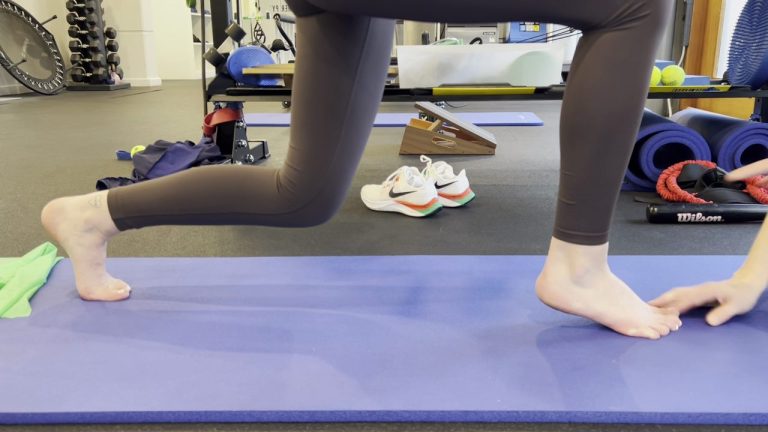
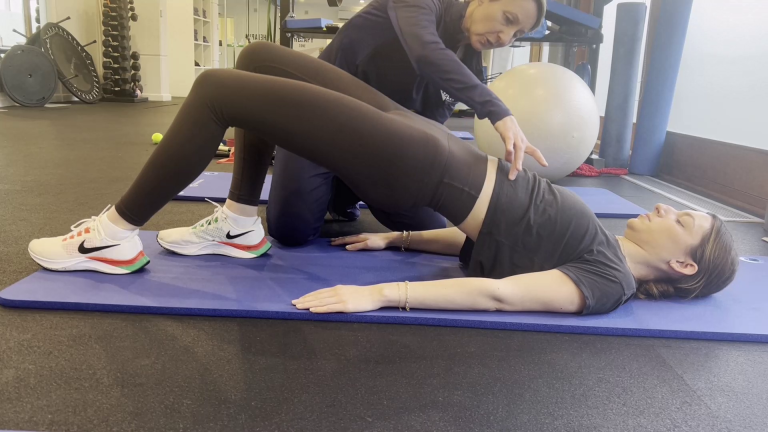
1. Specialist Physiotherapy & Functional Hip Rehabilitation
This is the foundation of treatment at LBSM.
Your personalised plan may include:
Improving hip mobility
Gentle, progressive mobility exercises help reduce impingement in certain positions.
Pelvic control & deep hip stabiliser strengthening
Weakness in the deep rotators and gluteal muscles can increase joint load.
Rehab targets:
- Gluteus medius
- Gluteus minimus
- Deep rotators
- Core and pelvic stabilisers
Movement retraining
Correcting patterns such as:
- Excessive hip internal rotation during running
- Knee valgus on squats
- Over-striding in runners
Activity modification
Not stopping sport, but adjusting volume, technique and loading to keep you moving safely.
Return-to-sport planning
Progressive exposure to direction changes, sprinting, cutting and lifting depending on your sport.
Typical recovery timeline:
- 6–12 weeks for mild FAI symptoms
- 12–20 weeks for more persistent cases or those linked to labral irritation
Consistency is key.
2. Posture and Ergonomics

Posture and hip position are particularly important for people with Femoroacetabular Impingement (FAI).
In FAI, the shape of the hip joint means that when the hip is placed into deep flexion, the ball and socket can abnormally contact each other, leading to irritation of the labrum and cartilage.
Prolonged sitting, especially when driving or working at a desk, keeps the hip in a flexed position and can increase this compression, often worsening symptoms.
Activities that involve deep hip bending, such as deep squats, lunges, or certain yoga stretches, may also aggravate the condition by repeatedly bringing the hip into positions where impingement occurs.
Paying attention to posture, taking regular breaks from sitting, and using options such as standing desks or kneeling chairs can help maintain a more open hip angle, reduce joint compression, and minimise irritation within the hip joint.
3. Sports Medicine Interventions
Our sports physicians support recovery using targeted treatments that complement physiotherapy.
Shockwave Therapy (ESWT)
Useful when FAI is accompanied by associated tendon irritation, particularly hip flexor or gluteal tendinopathy.
How shockwave helps
- Reduces pain sensitivity
- Stimulates healing in overloaded tendons
- Improves tissue function
- Encourages improved movement mechanics when combined with rehab
What it feels like
A firm tapping sensation lasting 5–10 minutes.
Uncomfortable at times, but well tolerated.
4. Ultrasound-Guided Injectionsfor FAI and Labral Tears – What Really Works?
Femoroacetabular impingement (FAI) and labral tears are fundamentally mechanical problems.
This means injections are not curative, but they can play an extremely valuable role in reducing pain, controlling inflammation and allowing patients to engage fully in rehabilitation.
Systematic reviews show that injection therapy does not alter bone morphology, but it improves pain and function for several months in many patients – when used appropriately and combined with expert physiotherapy.
What Does the Evidence Say?
Current evidence supports the use of injections in FAI primarily as:
- A diagnostic tool to confirm that the hip joint is the pain generator
- A short- to medium-term pain management strategy to enable rehabilitation
- A way of postponing or avoiding surgery in selected cases
Types of Injection Used in FAI & Labral Pathology
Corticosteroid Injection
Corticosteroid reduces inflammation within the joint, helping to calm synovitis caused by repeated impingement.
Best for:
- Acute inflammatory flares
- Severe pain limiting rehab
- Diagnostic clarification
Hyaluronic Acid
This type of injection can be used to improve joint lubrication and shock absorption.
Best for:
- Early cartilage wear
- Mechanical irritation without heavy inflammation
Platelet-Rich Plasma (PRP)
PRP involves injecting concentrated platelets from your own blood to release growth factors, stimulating the body’s natural healing response in the joint or surrounding soft tissue.
Best for:
- Associated tendon overload
- Early labral degeneration
- Patients wishing to avoid steroid
How injections are used at LBSM
Injections are never used as a “quick fix” in isolation. Instead, they are carefully integrated into a structured treatment programme.
Step 1 – Settle pain
Injection reduces joint irritation, so movement becomes tolerable again.
Step 2 – Restore movement control
Physiotherapy focuses on hip stability, pelvic control, gluteal strength and movement quality.
Step 3 – Progressive loading
Gradual return to running, sport or gym activity.
Step 4 – Long-term resilience
Biomechanics, gait retraining, strength progression and podiatry input prevent recurrence.
Can Injections Help Athletes Compete?
Yes, but only with caution.
Injections may be used strategically to allow athletes to complete a key competition, but they must always be followed by:
- A clear rehabilitation plan
- Load management strategies
- Education on symptom monitoring
Injections do not “fix” bony impingement but can dramatically reduce symptoms while strength and mobility improve – they should never replace proper treatment.
5. Podiatryfor Hip Mechanics
Your hip is influenced by what happens at your foot.
Our podiatrist can help by assessing:
- Foot posture and alignment
- Running gait
- Force distribution
- Footwear selection
- Orthotic needs (if appropriate)
Subtle changes in running mechanics can significantly reduce irritation at the hip joint.
6. Nutritionfor Hip Pain & Tendon Health
Our sports nutritionist can work with you to support:
- Advice on nutrition to help with your rehab
- Adequate protein for tissue recovery
- Anti-inflammatory nutrition
- Advice on supplements for joint health
- Weight management strategies, if beneficial for joint loading
Nutrition plays a helpful supporting role alongside rehab.
When Is Surgery Needed?
Most people improve without surgery, but it may be considered when:
- Symptoms persist after 3–6 months of structured rehab
- There is significant CAM or pincer bony overgrowth
- Labral tears cause mechanical symptoms
- Movement remains restricted despite therapy
- You are a high-performance athlete with ongoing limitation
surgery may include:
- Reshaping the bone (CAM or pincer correction)
- Repairing the labrum
- Improving joint clearance
- Treating cartilage damage
Types of surgery for FIA
Hip Arthroscopy (Keyhole Surgery): The most common approach, using small incisions (1 cm) for an arthroscope (camera) and instruments.
- Osteochondroplasty: Reshaping the femoral head (ball) or acetabular rim (socket) to remove bony bumps.
- Labral Repair/Debridement: Repairing or trimming torn labrum (cartilage rim).

- Microfracture/Chondroplasty: Creating tiny holes in damaged cartilage to stimulate new cartilage growth (fibrocartilage).
We work closely with some of London’s leading hip surgeons, ensuring fast access and coordinated care when needed.
Post-Operative Rehabilitation
Rehab is essential following hip arthroscopy.
0 – 4 weeks
- Crutches (partial weight-bearing depending on procedure)
- Gentle range-of-motion
- Pain and swelling management
4 – 8 weeks
- Progressive strengthening
- Core and gluteal conditioning
- Gait retraining
3 – 6 months
- Movement control and functional progressions
- Running programmes
6 – 9+ months
- Return to full training and competition
(depends on sport and procedure)
We will liaise closely with your surgeon and physio to tailor your plan and ensure you are supported throughout the entire process.
Frequently Asked Questions
Can FAI heal on its own?
FAI refers to bone shape, which doesn’t change, but symptoms can improve dramatically with rehab.
Do I need surgery?
Most patients do not. A combination of physiotherapy and sports medicine treatments is often enough.
Can I keep running?
Often yes, but with technique adjustments and load management.
Is clicking in the hip normal?
Not always. Clicking with pain may indicate labral involvement; clicking without pain is often harmless.
What is the recovery time for FAI without surgery?
Most people improve over 8 – 16 weeks with structured treatment.
Will injections fix FAI?
No, but they can reduce inflammation and pain so you can rehabilitate more effectively.
Is FAI linked to arthritis?
If untreated long-term, FAI can increase the risk of early cartilage wear. Early management is protective.
Summary
Whether your pain started gradually or after a single twisting movement, our team at LBSM is here to help. With expert diagnosis, tailored rehabilitation, sports medicine treatments and rapid access to hip preservation surgeons, you’ll have everything you need for a strong, confident return to the activities you love.